How to Nail the Wooden Kitchen Look
Warm, timeless, and full of character. Wooden kitchens work beautifully across a wide range of interiors, from rustic farmhouses to sleek minimalist spaces. But pulling the look together takes more than just choosing a nice wood. The right materials, colors, and finishes all have to work in harmony. We asked our Interior Designer, Leah, how to get every element right.

1. Choose the Right Type of Wood
Wood is one of the most versatile materials in kitchen design, and the species you choose sets the entire tone of the room. Think of it as your single most important decision before anything else.
- Light-toned woods (ash, oak): Perfect for Scandinavian-inspired or minimalist kitchens. These tones keep the spaces feeling bright and airy.
- Mid-tone woods (cherry, beech): Ideal for traditional or transitional designs. They bring gentle warmth without overwhelming the space.
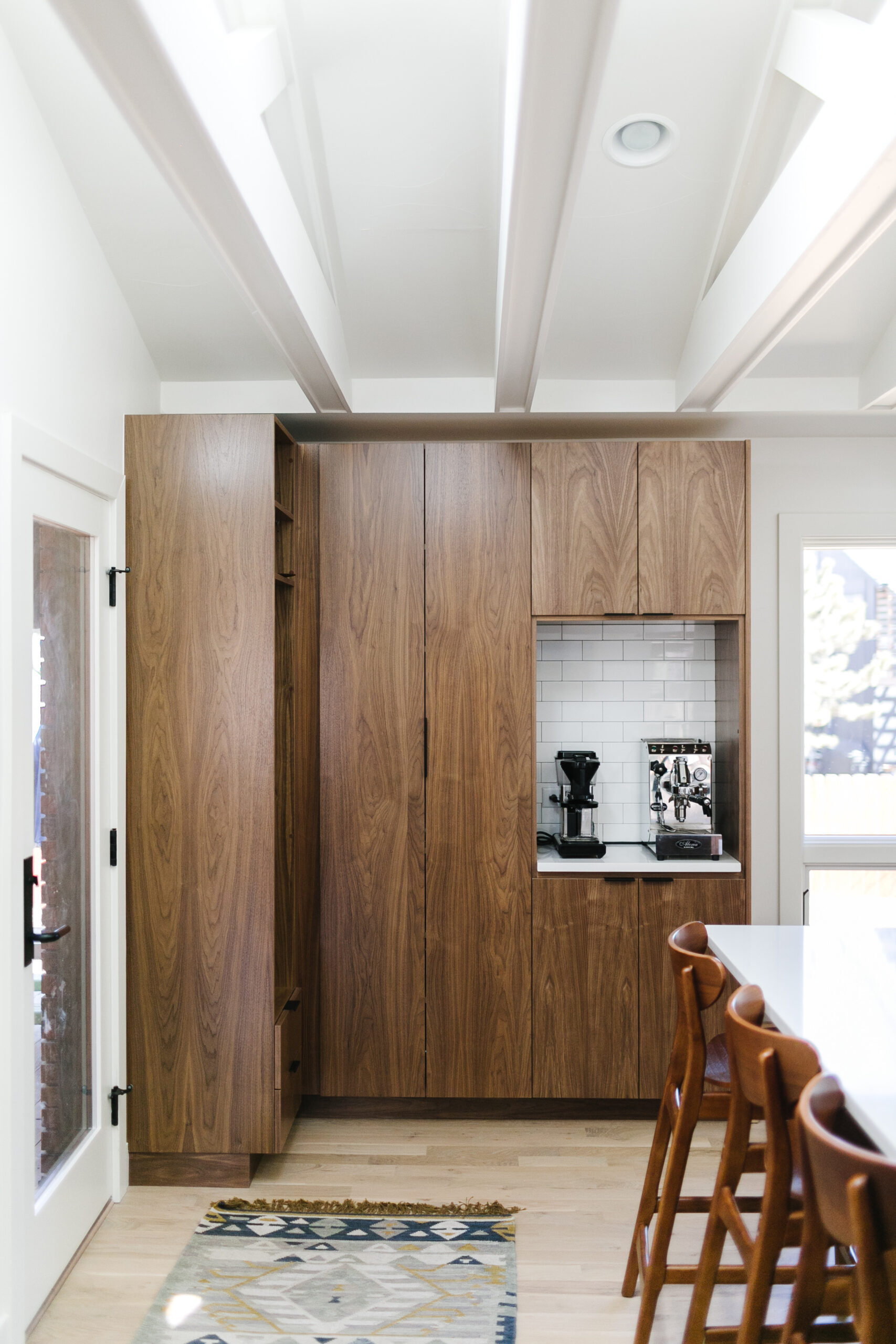
- Dark woods (walnut, ebony): These create a luxurious, dramatic effect. Best suited for modern or high-contrast interiors. See our Yale Project for more inspiration of mixed wood uses.
Beyond species, finish and application matter just as much. Wood countertops or butcher block bring warmth and character but require regular conditioning to protect against moisture and wear. When layering wood cabinets, floors, and surfaces together, coordinate undertones carefully – especially when sourcing materials from different vendors. Natural variation can be beautiful, but it needs intentional planning to feel cohesive rather than mismatched.

2. Create Contrast for a Balanced Look
Contrast is what keeps a wood-heavy kitchen from feeling flat. Without it, even the most beautiful material can read as monotonous.
Pairing wood flooring with wood cabinetry can work beautifully. Two clean-grained woods create a low-contrast, contemporary look, while a higher variation with visible knots leans more rustic and saturated. That said, one approach worth serious consideration: tile on the floor when the cabinets are wood. It gives you precise control over undertones in adjoining finishes, and tile’s range is enormous. Polished porcelain reads clean and modern; tumbled natural stone feels rustic and grounded. That flexibility is hard to beat.
3. Mix Materials Thoughtfully
Wood plays well with others. The key is choosing pairings that complement rather than compete.
- Stone: Timeless and durable, stone countertops create a beautiful contrast with wooden cabinetry, marble for elegance- we love a good patina over time, quartzite for durability, and leathered granite has become a popular choice in 2026.
- Terrazzo: A more playful, contemporary choice that adds texture and color, pairing especially well with warmer wood tones.
- Metal: Stainless steel appliances and hardware offer a sleek, modern counterpoint to the natural warmth of wood.
4. Be Intentional with Color
The colors surrounding your wood define the entire mood of the kitchen.
- Neutral tones (beige, white, soft gray): Keep the palette calm and cohesive, letting the wood do the talking.
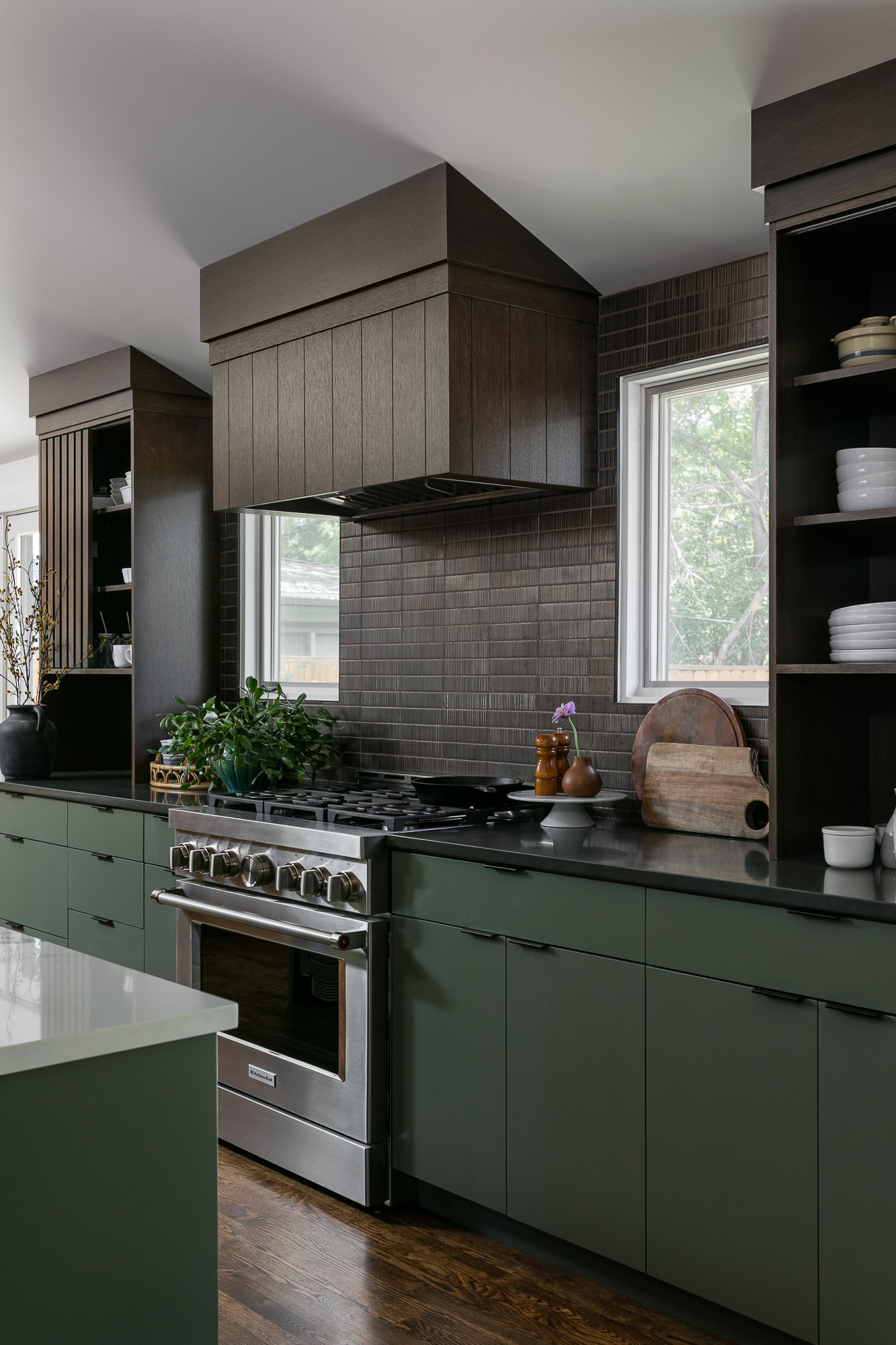
- Bold accents: A statement backsplash or colorful décor can create just the right amount of visual interest. Don’t be afraid of it!
5. Get the Appliances and Hardware Right
The finishing details are what tie a wooden kitchen together, and the wrong choices here can undercut an otherwise beautiful design.
- Panel-ready appliances integrate seamlessly into cabinetry for a clean, luxe furniture-like look.
- Stainless steel appliances pair well with both light and dark wood tones, adding a modern edge.
- Hardware makes all the difference; think of it as the jewelry of the kitchen. The right choice depends on the overall tone of the room: cooler cabinetry calls for silver metals, while warmer tones pair naturally with brass or gold. And don’t be afraid to mix metals; when done intentionally, it adds depth and a collected, lived-in feel that keeps the space from looking too matchy.
Wood is one of those rare materials that works in virtually any interior when handled well. Get the layering right, choose your contrasts deliberately, and you’ll end up with a kitchen that feels genuinely timeless — not just on trend.